CONTACT US
Drystone Chambers
35 Bedford Row
London
WC1R 4JH
DX: 332 London/Chancery Lane
CONTACT US
Drystone Chambers
35 Bedford Row
London
WC1R 4JH
DX: 332 London/Chancery Lane
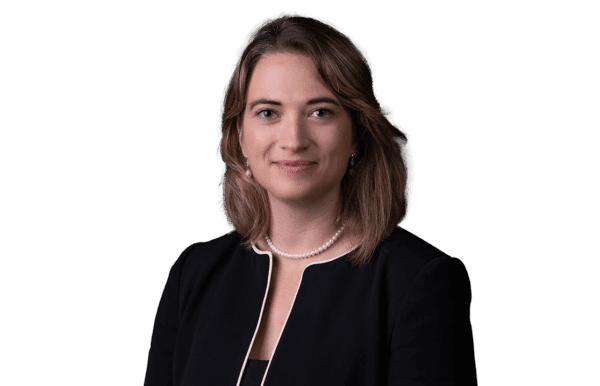
Eliza Harris, instructed by ACA Law, represented a defendant charged with one count of intentional strangulation and two counts of assault by beating of his then-partner. Police had been called to an address by the Complainant’s aunt, with whom the couple had been staying.
Allegations were made that the defendant had intentionally strangled the complainant on a platform at Stratford station and further assaulted her on two other occasions. He was arrested and charged in January 2025 with a trial listed for July 2025. The evidence relied on by the Crown included statements from the complainant, her aunt, police officers, and police body worn video footage. There was no CCTV footage of any count on the indictment.
At the first trial, the complainant completed her evidence-in-chief. However, whilst being cross-examined by Eliza Harris on several significant inconsistencies between her witness statement and her evidence-in-chief, the complainant stated that she felt “very overstimulated” and like she was being “very targeted”. Having only been cross-examined for 14 minutes, she asked to leave court and refused to return to continue giving evidence. After extensive legal argument, the learned judge ruled that the jury be discharged and ordered a retrial.
At the retrial, the complainant (who had been granted a live link), terminated the link only a few questions into her evidence-in-chief. After enquiries were made, it emerged that she had no intention of returning to continue giving evidence.
Given that the complainant was the only witness to the allegations, the Crown applied to admit the police body worn video footage of her initial account under the common law hearsay provision of res gestae, preserved under s.118(1) of the Criminal Justice Act 2003.
This provision sets out:
Any rule of law under which in criminal proceedings a statement is admissible as evidence of any matter stated if—
This provision can be an important tool for the Crown when, as is often the case, complainants in cases of domestic violence withdraw their support for the prosecution. It is most commonly used in relation to 999 calls.
In this case, Eliza opposed the application, relying on the principles set out in Andrews (D) [1987] A.C. 281,arguing that there was positive evidence to suggest that the possibility of concoction or distortion could not be disregarded, and that the statement was insufficiently spontaneous.
These submissions were based on two key considerations. Firstly, the account given to the police, and recorded on their body worn videos, was given 1 hour and 48 minutes after count 3 was alleged to have occurred and 4 days after count 1. It was therefore not “sufficiently spontaneous” or an “instinctive reaction” to the events alleged. Secondly, the possibility of concoction and distortion was at the heart of the complainant’s evidence. In her first account on the body worn video, she was clear that no one had witnessed the assault forming the basis of count 3, but during her evidence-in-chief at the first trial she told the court that her aunt had been right there at the time and witnessed the whole thing.
Eliza also highlighted the decision in Al-Khawaja v United Kingdom [2012] 54 EHRR 23 which set out that, where the sole or decisive evidence in a case is a statement made by a witness whom the defendant cannot examine or have examined, his rights may be restricted to an extent incompatible with Article 6.
The Crown’s application was refused and consequently, they offered no evidence against Eliza’s client. The jury were directed to return not guilty verdicts, and he was released the same day.
Eliza Harris was called to the bar in 2024. She became a member of Drystone Chambers in October 2025 following the successful completion of her pupillage.
To instruct Eliza, contact her clerks Ryan Bartlett or Amie Harris on 020 7404 1881.

Call 2024