CONTACT US
Drystone Chambers
35 Bedford Row
London
WC1R 4JH
DX: 332 London/Chancery Lane
CONTACT US
Drystone Chambers
35 Bedford Row
London
WC1R 4JH
DX: 332 London/Chancery Lane
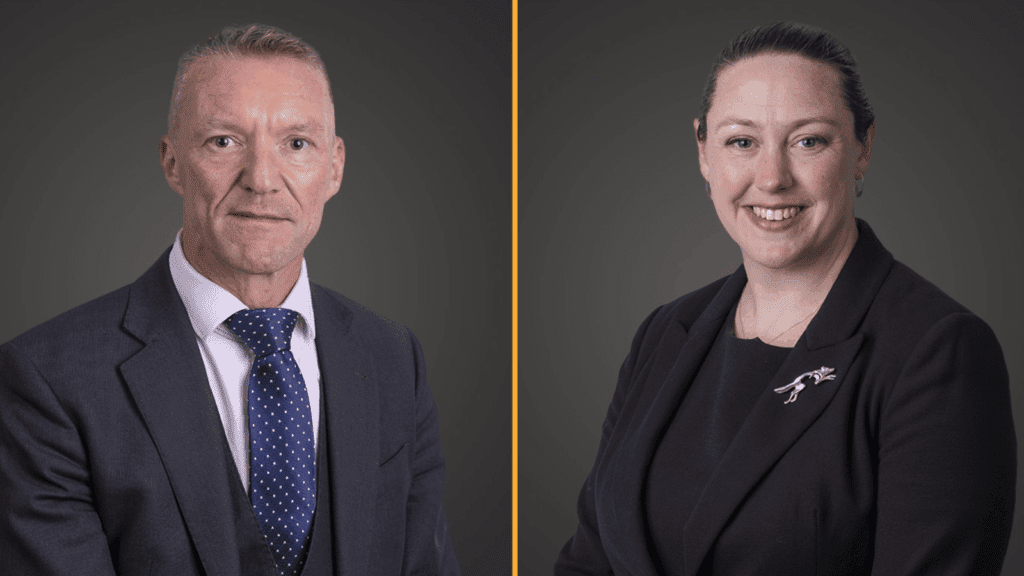
Robert Bryan, leading Helen Easterbrook, represented the Lead Appellant (Webb) in the recent Appeal against Conviction and Sentence before the Court of Appeal in R. v. Webb & Somerset-How [2025] EWCA Crim 1491 in which the Court discussed the definition of “slavery” and “servitude” in section 1 of the Modern Slavery Act 2015 (MSA) and suggested appropriate jury directions to be given when either were in issue.
The second Appellant, SSH, was the wife of the Complainant, TSH. TSH is a man who is severely disabled and required a substantial degree of care to perform basic daily functions such as getting out of bed, showering or leaving the house. Webb was initially employed to care for TSH via a care agency, moving to being directly employed by TSH/SSH after about a year. This factual matrix of the background, which has been extensively discussed in the media and on television, was the subject matter of a hotly contested Crown Court Trial. Until the start of the trial the Indictment alleged (i) holding a person in slavery or servitude, (ii) ill-treatment by a care worker, (iii) aiding and abetting ill-treatment by a care worker, (iv) assault occasioning actual bodily harm, (v) various theft/fraud offences. The matters (i), (ii) and (iii) covered a 4-year plus period. The Prosecution’s rationale for the slavery and servitude charge was (a) the condition in which TSH was kept and (b) that the ill-treatment by a care worker did not provide adequate sentencing powers. The Prosecution admitted that it was seeking to bring the case on a novel basis, potentially recasting the law.
From the outset the Defence challenged the legal basis of the slavery and servitude allegations:
(i) There was no evidence that TSH had provided any service. As regards ‘service’ the Defence argued that the Prosecution case was based on a misinterpretation of section 3 of the MSA through conflating ‘benefit’ with ‘providing service’. The Prosecution alleged that the receipt of wages stemming from DWP benefits and Webb living in the home was a ‘benefit’. The Defence argued these were not ‘services’ as contemplated by the Act.
(ii) While the evidence supported the allegation of ill-treatment, the conditions and TSH’s ability to undertake some self-determining tasks and communications meant his circumstances did not meet the definition of slavery.
(iii) The section 1 offence was unnecessary; the rationale that the ill-treatment count did not provide adequate sentencing powers was misconceived as it was always open to the Prosecution to sub-divide the time frame to provide counts that would permit consecutive sentencing.
(iv) “slavery” and “servitude” were distinct and should have been charged as separate counts.
These arguments were not accepted at an application to dismiss nor at various stages during the Trial; although at the start of the Trial the Crown did subdivide the ill-treatment allegation into 5 separate counts, one for each year or part of a year.
During the Trial the Judge stopped the case against Webb in relation to the theft and fraud matters; Webb was acquitted by the Jury of two of the allegations of ill-treatment but convicted of Count 1 holding a person in slavery and servitude, 3 counts of ill-treatment and ABH.
The Appeal was in large measure a repeat of the legal arguments that had gone before with the additional ground that the Judge’s summing-up included a misdirection to the Jury. In a lengthy judgment the Court agreed with the submissions made by Robert and Helen that servitude required the provision of a service; the Court agreed that section 3 did not bring into section 1 that servitude could be made out by the provision of a benefit. The Court did not agree with the Defence submissions that ‘Slavery and Servitude’ should be the subject of separate Counts; the Court preferred to follow how coercive and controlling behaviour is the subject of one Count. However the Court was persuaded that as there had been a single count before the jury, ‘servitude’ was not made out and the direction on ‘slavery’ was inadequate/a misdirection the conviction was unsafe. The Court could not be satisfied on what basis the Jury convicted. The Court further concluded that although the evidence of ill-treatment was strong the evidence of slavery was not sufficient for it to conclude that the conviction should stand.
Furthermore, the Court queried whether the allegation should ever have been brought as it was wholly unnecessary. The Court provided guidance (at paragraphs 95 and 96) as to how a jury should be directed in future cases but suggested that the draft directions might benefit from input by the authors of the Crown Court Compendium.
The Judgment’s general publication was delayed while the parties submitted written arguments for and against a re-trial. This section of the Judgment beginning at paragraph 114 is noteworthy. Again the Court of Appeal was not persuaded by the Prosecution. At paragraph 121 Edis LJ said, “Finally, we consider that it is relevant that the prosecution has had a full opportunity to present its case on count 1, and that the reason this issue arises now is that the judge made two errors which they failed to correct…. If the prosecution chooses to indict an offence in novel circumstances where the law is not widely understood, they bear a significant burden in assisting a trial judge to avoid error… Where a judge falls into error, having sought help from the prosecution about how he should direct a jury, it should not simply be assumed that in all cases the prosecution will be allowed to try again.”
Robert Bryan and Helen Easterbrook were instructed by Natalie Dennington and Louise Rodaway of Wessex Solicitors.
Robert Bryan was called to the bar in 1992. He is ranked Band 2 Crime in Chambers UK Bar 2026, and ‘Leading Junior’ Tier 1 Crime in Legal 500 2026. Robert’s practice covers a wide spectrum of serious crime including homicide, sex-offending, serious fraud and drug conspiracies.
Helen Easterbrook was called to the bar in 2011. She is ranked as ‘Leading Junior’ Tier 2 Crime in Legal 500 2026. Helen is routinely instructed in cases involving serious violence, substantial frauds and sensitive sexual assaults including rape.
To instruct Robert and Helen, contact their clerks, Steve McCarthy, Ryan Bartlett or Amie Harris on 020 7404 1881.

Call 1992

Call 2011